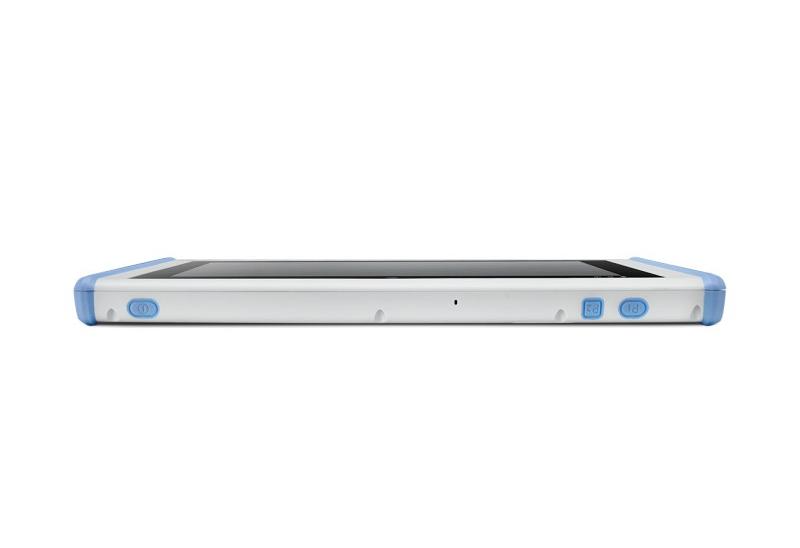
A Medical Grade Tablet is a specialized mobile computing device designed specifically for use in healthcare environments like hospitals, clinics, and laboratories. Unlike consumer-grade tablets (like an iPad or Galaxy Tab), these devices are engineered to meet strict regulatory standards for safety, hygiene, and clinical workflow.
The core differences generally fall into four categories:
1. Infection Control
This is the most critical feature. Medical tablets are built to prevent the spread of healthcare-associated infections (HAIs).
- Antimicrobial Housing: The outer shell often contains additives that inhibit the growth of bacteria and mold.
- Disinfectant-Ready: They are designed with non-porous materials that can withstand frequent wiping with harsh clinical disinfectants (like bleach or high-concentration alcohol) that would eventually corrode or crack consumer plastics.
- Fanless Cooling: Many use fanless designs to avoid circulating dust, pathogens, or allergens throughout a sterile environment.
2. Regulatory & Electrical Safety
To be used near patients or sensitive medical equipment, these tablets must pass specific certifications:
- IEC/UL 60601-1: This is the gold standard for medical electrical equipment. It ensures the device won’t interfere with other medical machinery (like ventilators or heart monitors) and protects patients/staff from electrical leakage or shocks.
- IP Ratings: They typically have high Ingress Protection (IP) ratings (e.g., IP65), meaning they are sealed against dust and liquids, allowing them to be fully sanitized without damaging the internals.
3. Healthcare-Specific Hardware
Medical tablets often integrate tools that clinicians need during their shifts:
- Integrated Scanners: Built-in 1D/2D barcode scanners for patient wristbands and medication verification.
- Security: Integrated Smart Card (CAC/PIV) or RFID readers for “tap-and-go” secure login, which is faster than typing passwords while wearing gloves.
- Hot-Swappable Batteries: This allows the tablet to stay powered 24/7 across multiple shifts by swapping a low battery for a charged one without shutting the device down.
4. Display Quality
- DICOM Compliance: Some high-end medical tablets feature screens calibrated for DICOM (Digital Imaging and Communications in Medicine) standards, allowing doctors to view X-rays or diagnostic images with high grayscale accuracy directly at the bedside.
- Glove-Touch Technology: The touchscreens are calibrated to work even when the user is wearing surgical or latex gloves.
Medical tablet VS Consumer tablet:
| Feature | Medical Grade Tablet | Consumer Tablet |
| Cleaning | Harsh chemical disinfectants | Damp cloth only |
| Safety | IEC/UL 60601-1 certified | Standard consumer electronics |
| Cooling | Usually fanless (sealed) | Often uses fans |
| Security | RFID / Smart Card / Imprivata | Biometrics/Password |
| Durability | Ruggedized and drop-tested | Fragile; requires a case |
OEM/ODM Service
Wentaida provides OEM/OEM design and manufacturing services, if you’d like to explore how our tablets can help both your employees and your patients, contact Wentaida System today. We’d be happy to explore how our various products can answer your needs.