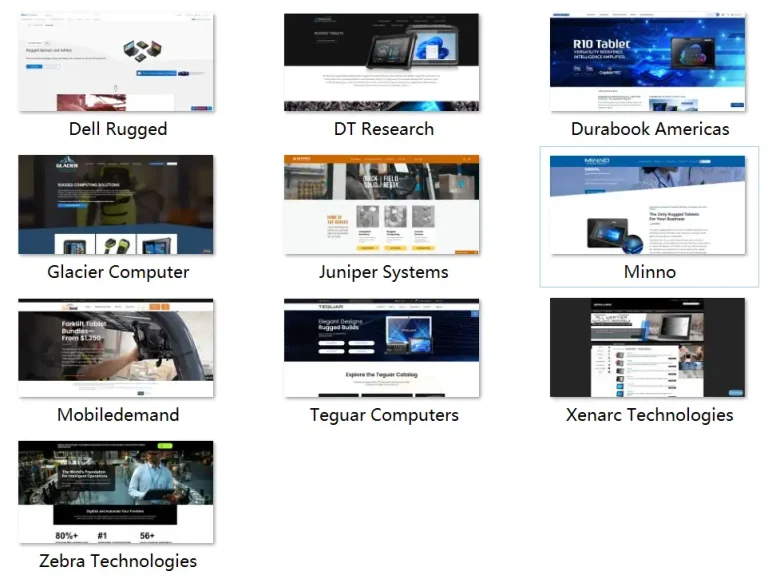
The primary differences between U.S. and Chinese rugged tablet PC manufacturers lie in their innovation focus, pricing strategies, and OEM/ODM services. While U.S. manufacturers like Juniper and Dell dominate the high-end market with proprietary software and advanced chip design, Chinese manufacturers like Wentaida, Hosoton and numerous “white-label” brands focus on aggressive pricing, rapid production cycles, and hardware-rich specifications.
Key Differences:
| Feature | U.S. Manufacturers (e.g., Juniper, Zebra, Dell) | Chinese Manufacturers (e.g., Wentaida, Estonetech, Hosoton, Portworld) |
|---|---|---|
| Market Segment | Focus on high-end, premium devices with high build quality. | Broad range from ultra-budget to high-end flagship models. |
| Innovation | Leaders in chip design (ARM/x86), proprietary OS, and AI integration. | Leaders in supply chain efficiency, 5G integration, and hardware value. |
| OEM/ODM | Most US tablet manufacturers do not offer customization services | Full OEM/ODM customization services available |
| Pricing | Higher price points due to brand equity, R&D, and higher US/European labor costs. | Highly competitive, low-cost pricing enabled by state subsidies and local manufacturing. |
| After-Sales | Robust local service networks and long-term software update commitments. | Varied; major brands have global hubs, but smaller brands may lack local repair centers. |
Core Strategic Differences
- Manufacturing Power vs. Design Dominance:
- China is the world leader in electronics manufacturing, accounting for over 25% of global exports. Its manufacturers leverage massive economies of scale and highly integrated supply chains to produce hardware faster and cheaper than Western rivals.
- The U.S. maintains a significant lead in the “tech stack” value—approximately $725 billion compared to China’s $125 billion—driven by its dominance in high-end semiconductors (like Nvidia and Qualcomm) and operating systems.
- Hardware Specifications:
- Many Chinese tablets offer impressive “on-paper” specs (e.g., high RAM or core counts) at low prices but may use older or less powerful processors if Android (like Unisoc or older MediaTek chips) that lag in real-world performance compared to U.S.-designed silicon.
- U.S. brands often prioritize screen quality and touch reporting rates, whereas budget Chinese models may use middle cost panels.
- Security and Logistics:
- U.S. agencies have raised concerns regarding supply chain security for tablets tracing back to Chinese military-controlled entities, particularly for use in critical infrastructure.
- Chinese e-commerce platforms (like Temu or AliExpress) often bypass traditional U.S. middlemen, shipping directly from factories to consumers to maintain lower prices.