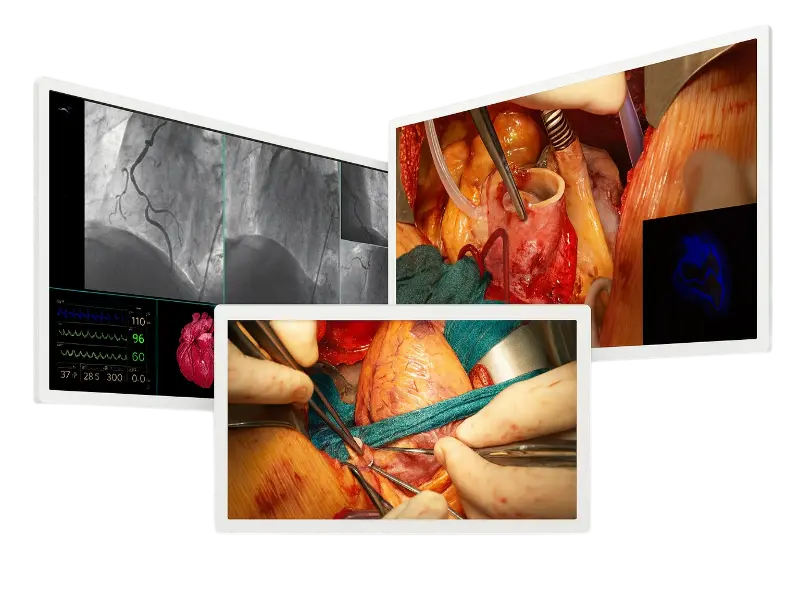
Medical surgical monitors differ from regular displays by offering specialized, high-definition (4K), and DICOM-compliant imaging with superior brightness, contrast, and color accuracy for precise, real-time surgical visualization. They are designed for durability and hygiene, featuring sealed, liquid-resistant screens (IP65) and certifications for safety.
Key differences between medical monitors and regular displays include:
- Image Quality and Accuracy: Surgical monitors provide higher resolution and consistent brightness across the screen to eliminate “splotchy” or dim areas. They can display up to 1 billion colors, whereas consumer monitors typically show 16 million.
- Safety and Compliance: Surgical monitors are certified to meet medical standards, such as IEC 60601-1 for electrical safety and electromagnetic compatibility, ensuring they can be used near patients without interfering with other equipment.
- Hygiene and Durability: Medical surgical monitors are designed for sterile environments, featuring sealed enclosures without fans to prevent the spread of contaminants and to withstand harsh, regular cleaning with disinfectants.
- Performance (Low Latency): Surgical monitors offer low latency and high refresh rates to ensure real-time, smooth display of surgical images, which is critical for endoscopic and laparoscopic procedures.
- Image Optimization: Many surgical monitors feature anti-glare, and anti-reflective coatings, as well as features like picture-in-picture (PIP) to display multiple inputs simultaneously.
When to Choose Medical Monitors
Choosing between a medical monitor and consumer-grade monitor depends on the specific needs, and requirements of the environment in which the monitor will be used.

In essence, medical monitors are essential in healthcare environments where image quality, patient safety, regulatory compliance, durability, hygiene, and long-term reliability are critical considerations. Medical-grade monitors are the best choice for:
In conclusion, the choice between medical monitor and regular display is not merely a matter of preference; it’s a decision that directly impacts patient care, regulatory compliance, and the overall efficiency of healthcare facilities. Medical monitors stand as the pinnacle of excellence in healthcare imaging and diagnostics, offering unparalleled image quality, stringent safety standards, and lasting reliability.
Make the smart choice for your healthcare facility by choosing WenTaida’s medical monitors. Contact us today or explore our range of medical monitors.