When outfitting a clinic, hospital ward, or diagnostic imaging center, one of the most common questions procurement officers face is whether they can save money by using standard consumer monitors instead of specialized medical displays.
While a high-end consumer monitor might look impressive on a desk, it is fundamentally different from a medical monitor display or a medical panel PC. The difference isn’t just about aesthetics; it comes down to patient safety, diagnostic accuracy, and long-term reliability.
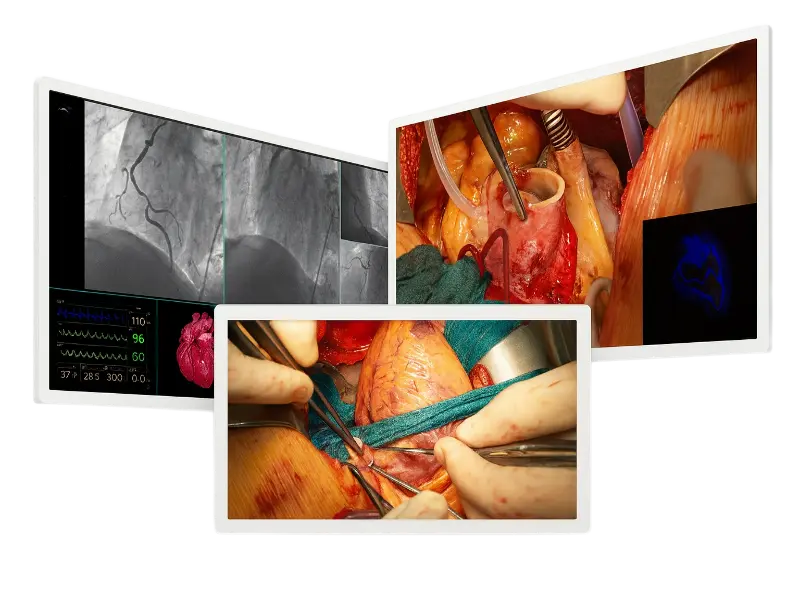
Here is a breakdown of the real differences between medical-grade and consumer-grade displays.
1. Image Accuracy and DICOM Calibration
The most critical difference lies in image precision. Consumer monitors are designed to make photos and videos look “pleasing” to the human eye, often oversaturating colors and crushing dark details.
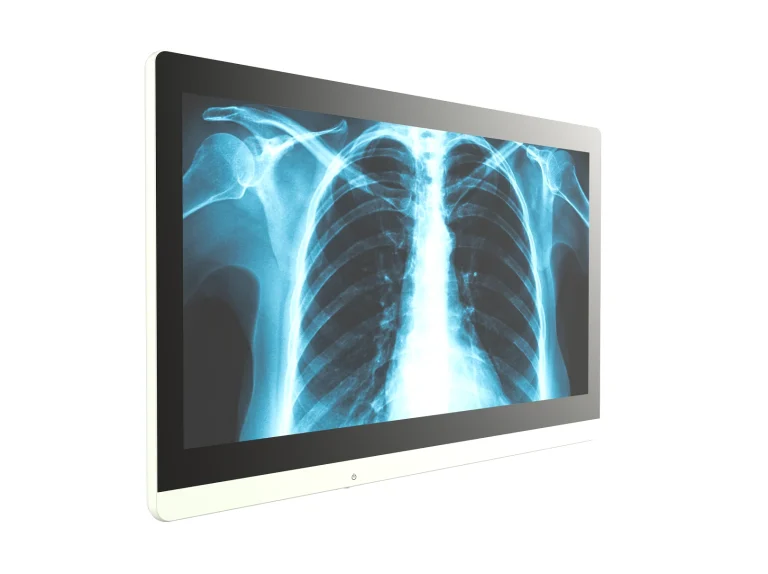
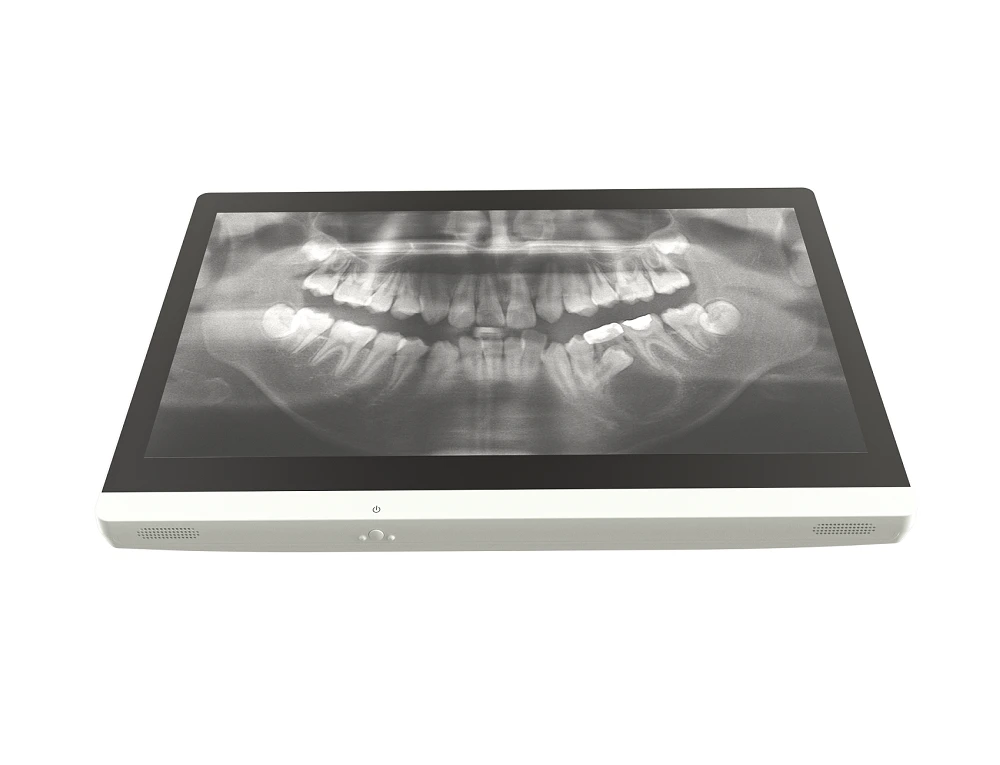
Medical displays, however, are engineered for absolute accuracy. They are calibrated to meet the DICOM Part 14 (GSDF) standard. This ensures that the grayscale tones—from pure black to bright white—are displayed consistently.
- Why it matters: In radiology or surgery, a doctor must be able to distinguish between subtle tissue densities. A consumer monitor might merge a tiny lesion into the black background, leading to a misdiagnosis. Medical displays use 10-bit or 12-bit Look-Up Tables (LUTs) to display thousands of precise shades of gray, ensuring no clinical detail is lost.
2. Brightness Stability Over Time
All LCD screens lose brightness as they age. A consumer monitor might start with decent brightness, but after a year of heavy use, its luminance can degrade significantly.
Medical-grade monitors are built with built-in backlight stabilization sensors. These sensors continuously measure the screen’s light output and automatically adjust the LED backlight to maintain a constant, calibrated brightness level (often 500 to 1000+ cd/m²) throughout the display’s entire lifespan. This guarantees that an X-ray viewed today looks exactly the same as it will in five years.
3. Electrical Safety and EMC Compliance
Hospitals are filled with sensitive, life-saving equipment like ECG machines and ventilators. Consumer monitors are not designed with strict electrical safety boundaries and can emit electromagnetic interference (EMI) or leak micro-currents.
Medical displays must comply with stringent international standards, such as IEC 60601-1 and IEC 60601-1-2. They feature advanced shielding, galvanic isolation, and external power adapters to prevent any electrical leakage or interference. In a clinical environment, using a non-certified monitor is a legal and safety liability.
4. Infection Control and Durability
A consumer monitor has vents and gaps where dust and liquids can easily enter. If hospital staff wipe it down with strong industrial disinfectants (like bleach or hydrogen peroxide), the corrosive liquid will seep inside and destroy the motherboard.
Medical monitors and medical panel PCs are designed for harsh healthcare environments. They feature:
- Sealed Enclosures: Often rated IP54 or IP65, preventing liquids and dust from entering.
- Antimicrobial Coatings: Screens and casings treated to inhibit the growth of bacteria and prevent cross-contamination between patients.
- Chemical Resistance: Built to withstand daily wiping with aggressive hospital-grade cleaning agents.
5. 24/7 Continuous Operation
Consumer electronics are designed for intermittent use (e.g., 8 hours a day). Medical environments operate around the clock. Medical-grade displays are engineered with industrial-grade components and robust thermal management to support 7×24 continuous operation without overheating or suffering premature failure.
The Bottom Line
While consumer-grade monitors may seem like a cost-effective shortcut initially, they introduce severe risks regarding diagnostic accuracy, patient safety, and equipment downtime.
Investing in a certified medical monitor display or medical panel PC is not just about buying a screen; it is an investment in clinical precision, regulatory compliance, and long-term operational stability.