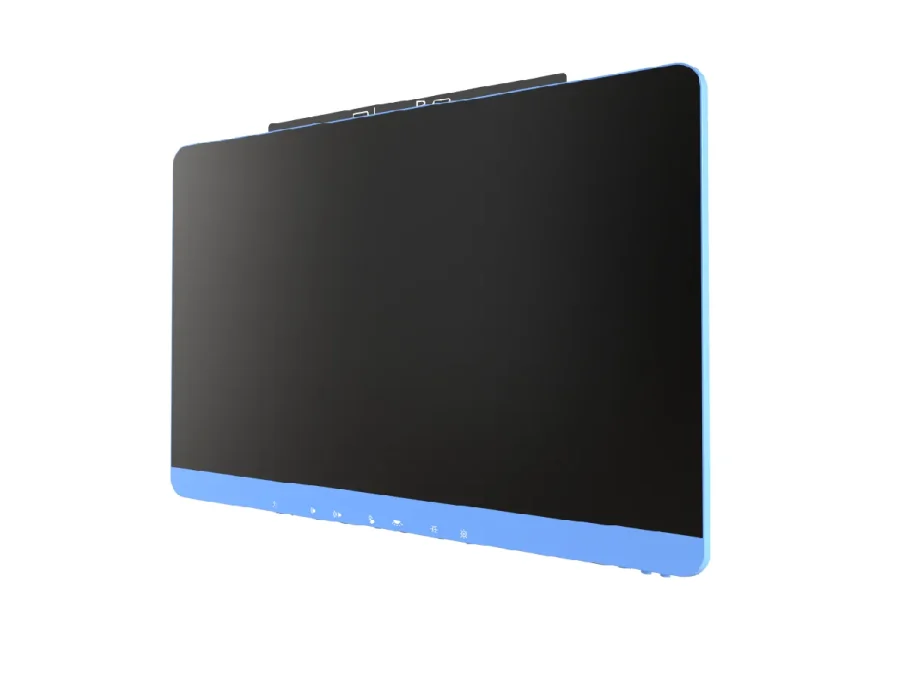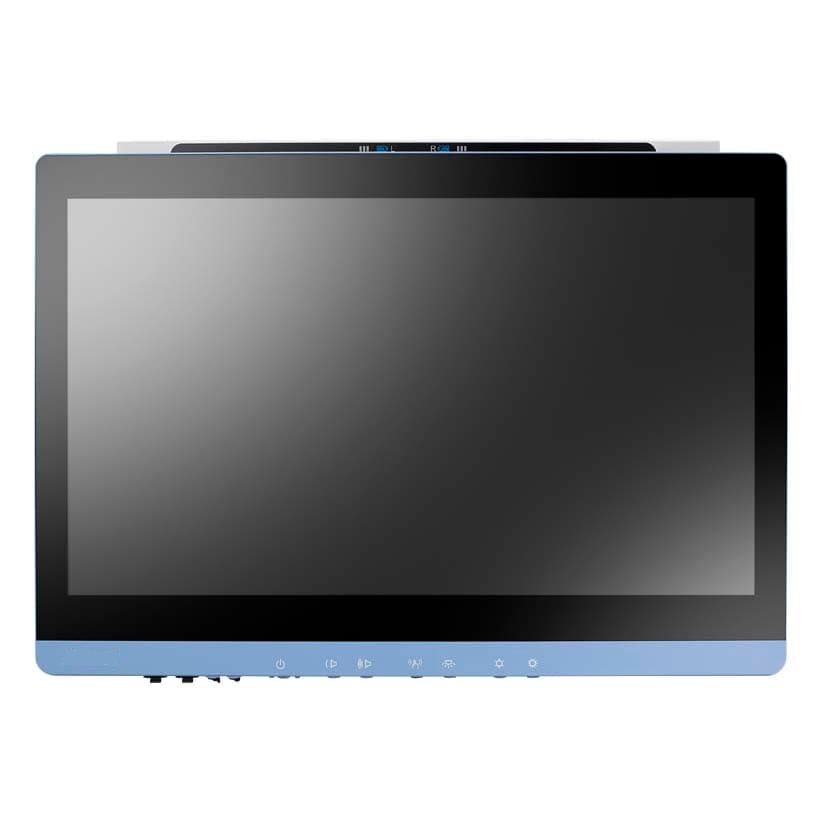
Medical panel PCs are specialized all-in-one computers engineered for hospitals, surgical rooms, and clinical point-of-care stations. They combine strict safety certifications, high-durability sanitation features, and reliable processing power to withstand rigorous healthcare environments.
Safety and Compliance
- Medical certifications: Compliant with IEC/EN 60601-1 and UL safety standards to ensure electrical safety near patients.
- EMC isolation: Designed to prevent electromagnetic interference with sensitive life-support and diagnostic equipment.
- Regulatory approvals: Often FDA-listed or MDR-certified for clinical deployment.
Hygiene and Physical Design
- Water and dust protection: Front panels feature IP65 or IP66 ratings, allowing routine wipe-downs with harsh sterilizing liquids.
- Fanless cooling: Sealed, fanless architecture stops the circulation of dust and bacteria and ensures silent operation.
- Antimicrobial housing: Enclosures often include anti-microbial coatings to minimize pathogen growth.
- Edge-to-edge glass: True-flat, seamless touchscreens prevent fluid pooling and trapped debris.
Display and Interaction
- Medical-grade touch: Projected capacitive (PCap) multi-touch screens that function reliably even when operators wear medical gloves.
- DICOM compliance: Optional DICOM part 14 preset support for accurate grayscale medical image and X-ray viewing.
- High visibility: Anti-glare and chemical-etched coatings to reduce eye strain under bright surgical lights.
Integration and Connectivity
- Flexible mounting: VESA mounting support for easy attachment to walls, medical carts, or surgical booms.
- Isolated I/O ports: Specialized serial, USB, and LAN ports with galvanic isolation to protect against electrical leakage.
- Built-in modules: Optional integration for RFID/NFC readers, smart card readers, barcode scanners, and medical cameras.
Generally, the manufacturer will provide the same series of medical panel PC and medical display monitor.